
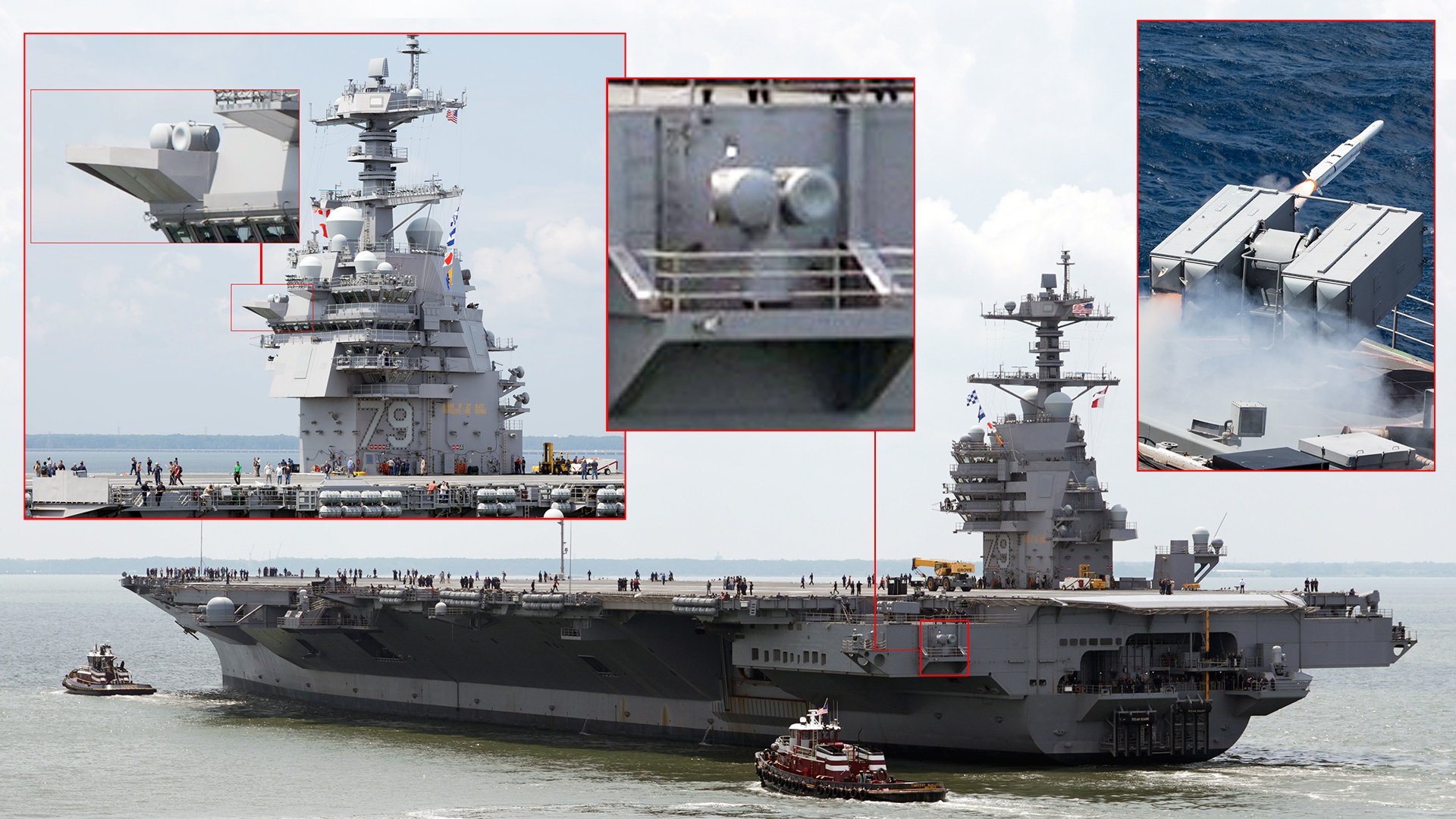
The U.S. Navy’s Ford class aircraft carriers have been very much in the news in the past week, with huge changes to the core design now potentially on the horizon. Whether or not radical changes to the catapults, weapons elevators, and island superstructure on future ships in the class actually materialize remains to be seen. However, the design has already been changing in various other ways. This includes adding back in a feature that had been found on all Nimitz class carriers and other Cold War-era flattops before it – dedicated radar illuminators to guide surface-to-air missiles.
The illuminators are used to guide the RIM-162 Evolved Sea Sparrow Missiles (ESSMs). The need to add this feature is intertwined with a decision to integrate a replacement for the complex and troublesome Dual Band Radar (DBR) on all forthcoming carriers in the class after the USS Gerald R. Ford. The future USS John F. Kennedy is the first of those ships.
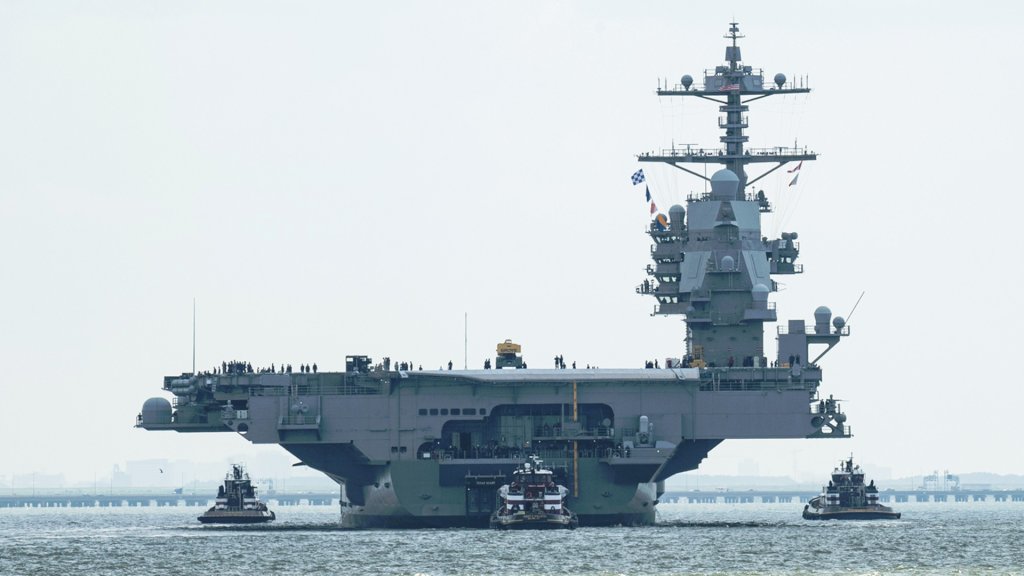
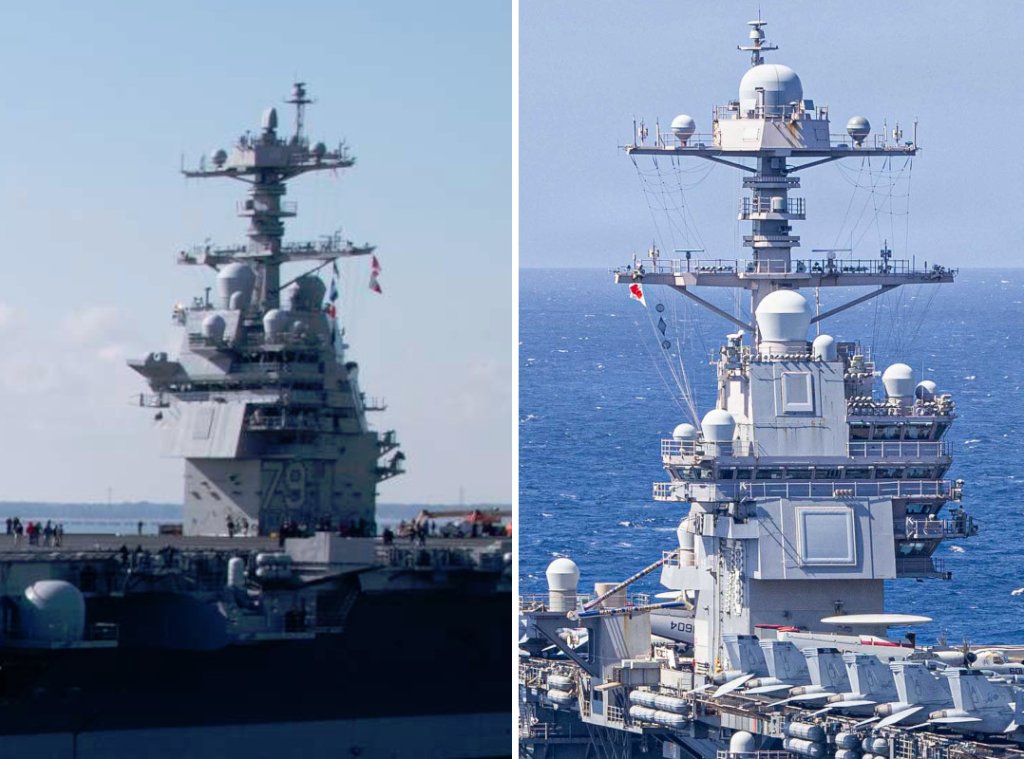
The Mk 95 radar illuminators on John F. Kennedy were particularly visible in pictures released last week of the ship leaving port in Newport News, Virginia, to begin acceptance sea trials. The carrier, also known by its hull number CVN 79, made its maiden voyage in January, and the Navy hopes to take formal delivery of the ship before the end of the year.

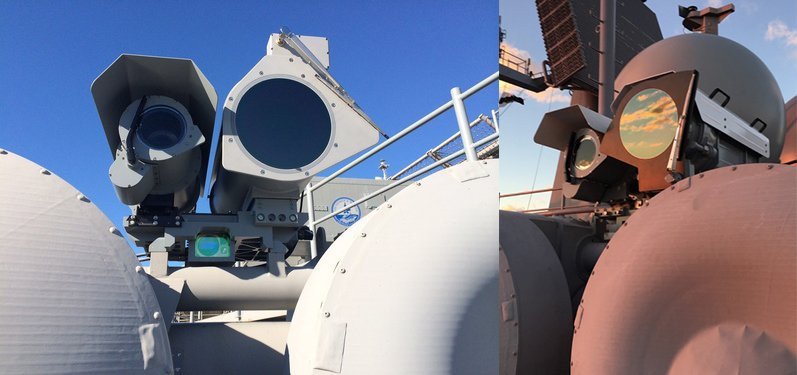
The Mk 95 traces back to the 1970s and was originally designed to support the employment of surface-launched RIM-7 variants of the Sparrow missile. All versions of the RIM-7 use semi-active radar guidance, which requires the launch platform to ‘illuminate’ the target.
As an example of the mode of operation for the RIM-7, if a ship were to detect an incoming cruise missile or some other kind of aerial threat, it would cue the missile in the right direction, fire it, and then use illuminators like the Mk 95 to ‘paint’ the target in radar energy. The missile’s seeker would then passively home in on the reflected radar energy through the terminal phase of flight.
When it was first introduced, the Mk 95 was part of a larger fire control suite that also brought an important new level of automation compared to previously available capabilities. Some earlier illuminators on Navy ships even had to be manually operated by sailors on deck.
Today, Mk 95s are found on a variety of U.S. and foreign naval vessels, including the Navy’s Nimitz class carriers. Some versions of the illuminators have camera systems to further help spot and track incoming threats, which have also been upgraded over the years. Improvements in associated combat systems also mean they have become better able to manage available illuminators to allow for as many engagements simultaneously as possible.
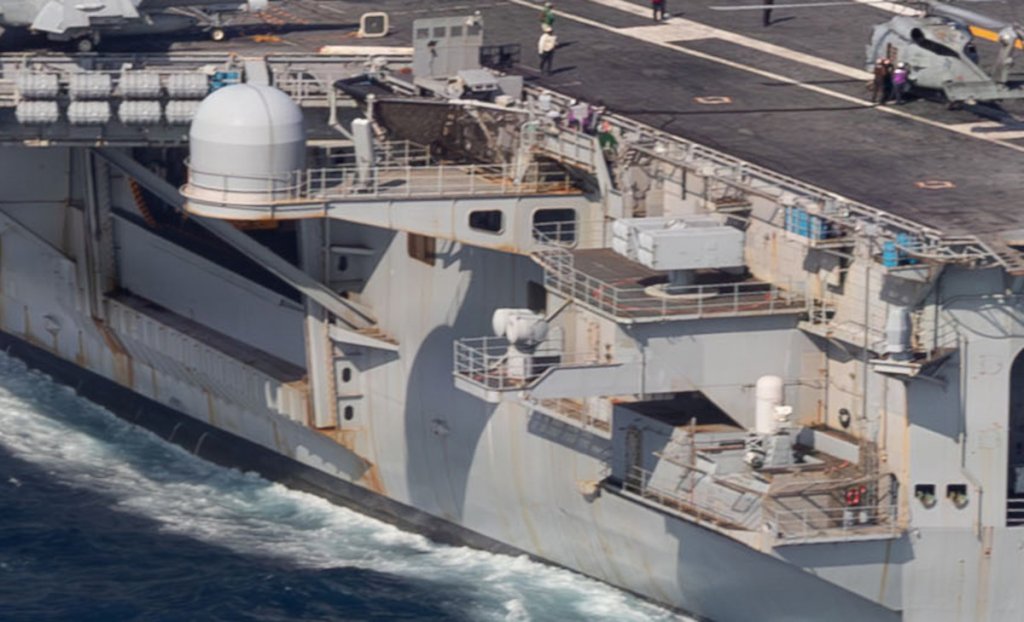
The RIM-7 family has since been supplanted in U.S. Navy service with the improved RIM-162 ESSM. Block 1 variants of the ESSM also use semi-active radar guidance and have the same general mode of operation as their predecessors. New Block 2 versions, which began entering service in the early 2020s, have semi-active and active modes, the latter of which does not require any illumination in the terminal phase. In addition, the new missiles feature a data link, allowing them to receive targeting updates after launch, helping cue them to the target area, which further reduces the need for an illuminator in the initial phases of flight. It is also very valuable for longer-range engagements beyond the horizon, especially against low-flying cruise missiles.
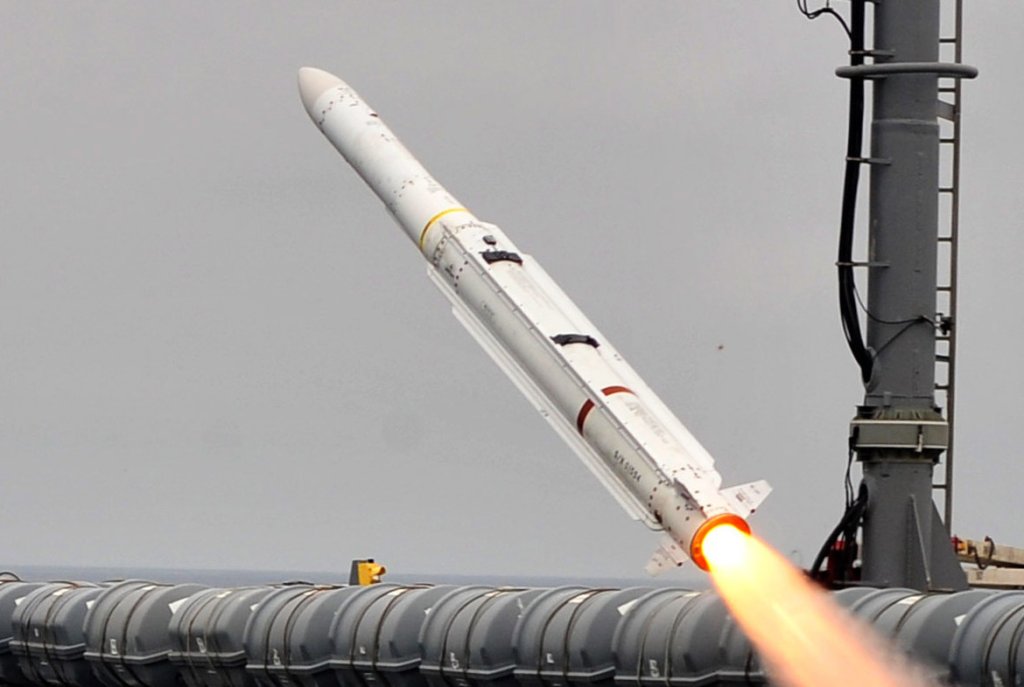
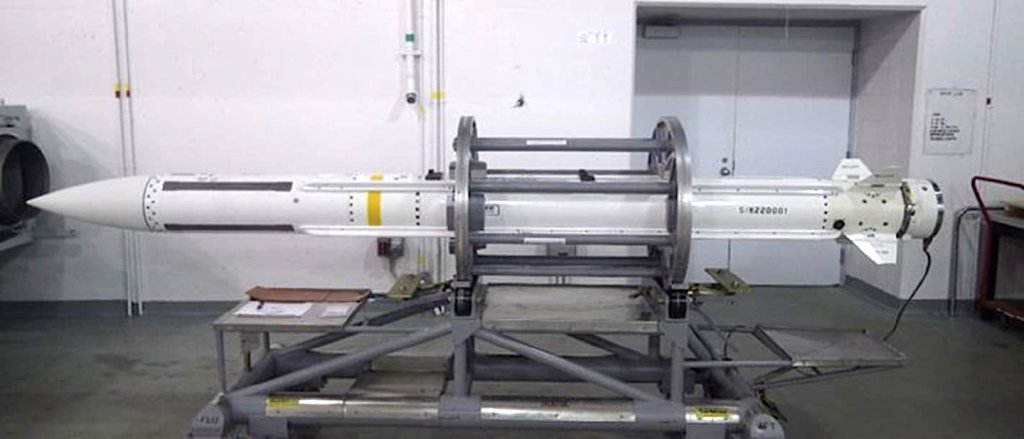
At present, the defensive armament suite on Ford class aircraft carriers includes two 21-round launchers for RIM-116 Rolling Airframe Missiles (RAM), three Mk 15 Phalanx Close-In Weapon Systems (CIWS) armed with 20mm Vulcan cannons, four 25mm cannons on Mk 38 mounts, and various small arms. There are also two eight-cell Mk 29 launchers, a design that also dates back to the 1970s and was originally designed to fire RIM-7 Sparrows. The Mk 29 has since been adapted to fire Block 1 ESSMs, but there were issues in integrating Block 2 versions owing to the increased weight of those missiles, at least in the past.
“CVN 79 and follow-on Ford class ships will be upgraded to a mix of new RAM variants Block 2A and 2B, plus a mix of ESSM Block 1 and Block 2,” according to an annual report from the Pentagon’s Office of the Director of Test and Evaluation (DOT&E) covering work on the program during the 2025 Fiscal Year.
The Navy’s most recent annual budget proposal for Fiscal Year 2026 does note work to modify the Mk 29 launchers to support Block 2 ESSM capability, but the current state of those efforts is unclear. The service is also pursuing an entirely new launcher to replace the aging and increasingly unsupportable Mk 29, as well as a follow-on to the Block 2 ESSM.
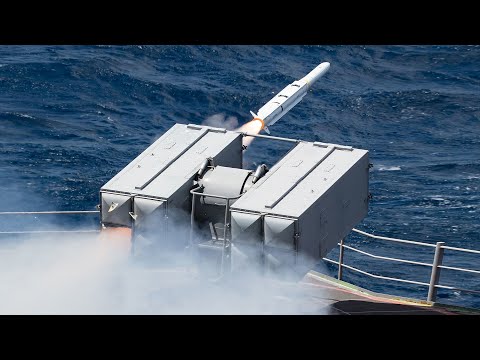
Even with integration of the Block 2 ESSM, Ford class carriers will still have to provide ‘illumination’ in order to employ Block 1 versions of the missile, which remain in active Navy inventory. As noted, Block 2 variants can be employed in a semi-active radar homing mode, as well.
This all brings us to the matter of the DBR, which was intended to be the main radar on all members of the Ford class. The DBR consists of two distinct radar systems, the AN/SPY-3, an X-band active electronically scanned array (AESA) type, and the AN/SPY-4, an S-band phased array. On paper, this was set to be a powerful combination. In a defensive scenario, the SPY-3 would be used for horizon search, generating high-fidelity target tracks, and providing illumination for semi-active radar homing interceptors like the ESSM. The volume search SPY-4 would provide additional long-range search and tracking functionality. Being able to fuse all that data for the dual arrays together, while also leveraging the specific capabilities of the quick-scanning AESA SPY-3, would only offer even greater benefits.
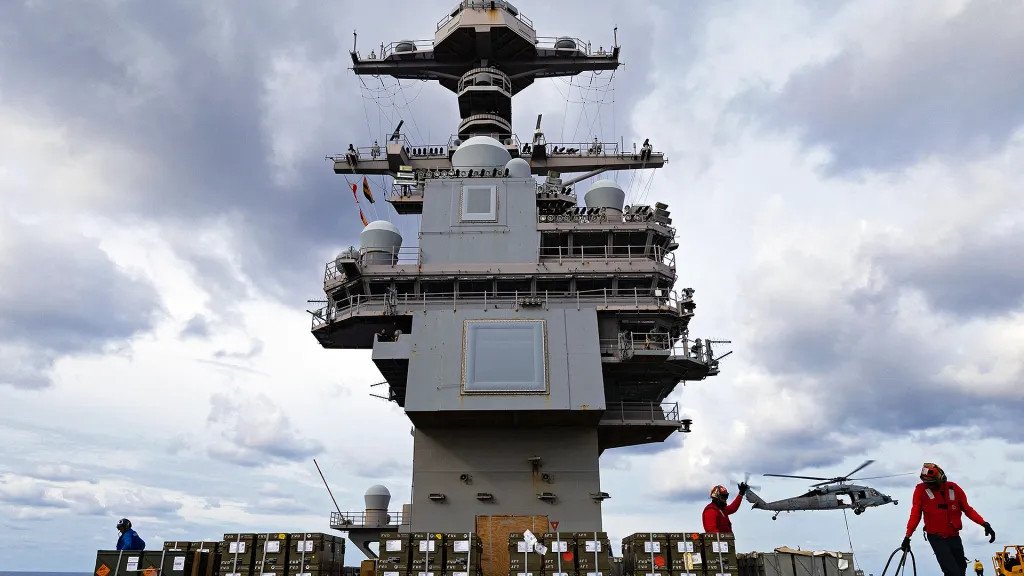
As part of the original Ford design, DBR also serves as host of other functions, including helping to provide air traffic control in support of flight operations. This also allowed the Navy to pare down the total number of distinct radars on the ship compared to the Nimitz class. This, in turn, directly factored into the design of a smaller and more angular flight deck island on the Ford class. Just this week, TWZ published a separate detailed piece on the island, and the reasons for its location so far back on the flight deck. This followed reports this past weekend that President Donald Trump is pushing the Navy to reposition the structure on future ships in this class on aesthetic grounds.
Despite the promised benefits, and its deep integration into the Ford class design, the DBR has proved to be extremely complicated and unreliable.
“Here’s the one thing that I think I screwed up. I think I’m responsible for at least a billion-dollar cost of overrun because I wanted to reduce the number of radars,” retired Navy Capt. Tal Manvel, who served for a time as Program Manager for Future Carriers, said during a presentation at the U.S. Naval Academy Museum in 2015. “I did not appreciate that the complexity of that is not just increasing scale like with a mechanical system, like in the propulsion plant, but the complexity of the software-hardware interface.
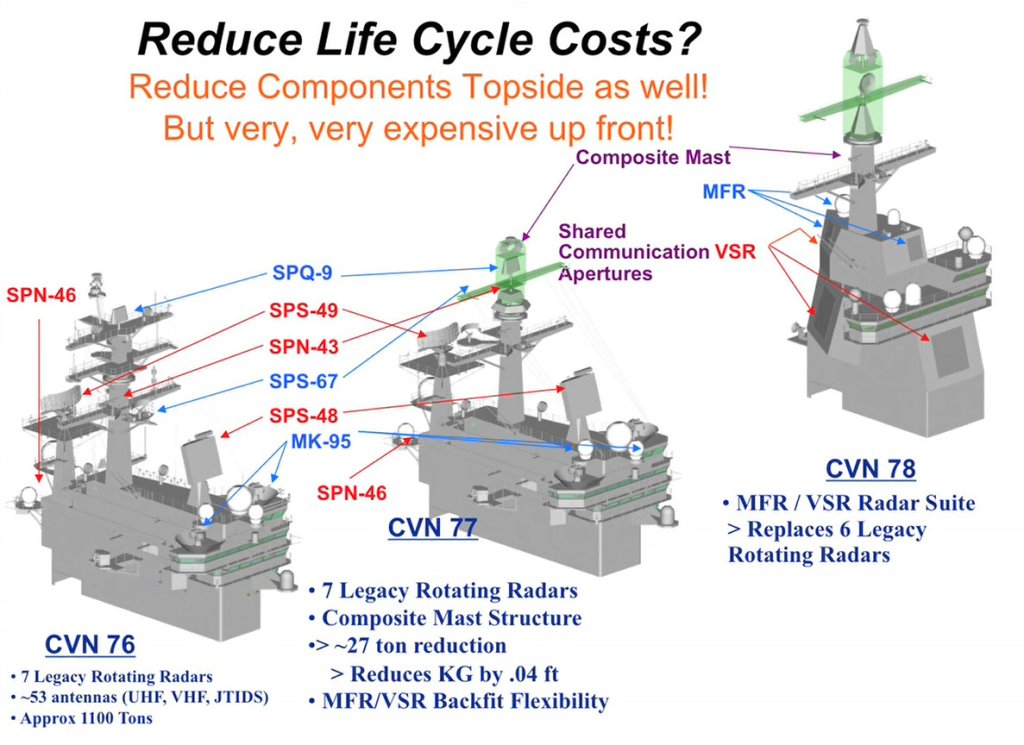
“That’s my fault. I screwed up on that because I thought that this would be significant,” Manvel continued. “It turns out to be a big cost driver up front, and that’s one of the reasons why the Ford has this challenge of cost.”
You can watch Tal Manvel’s full 2015 presentation below.

The Navy has since made the decision to replace the DBR on Ford class carriers primarily with the AN/SPY-6(V)3, also known as the fixed-face version of Raytheon’s Enterprise Air Surveillance Radar (EASR). The AN/SPY-6(V)3 has three antenna arrays compared to the DBR’s six. John F. Kennedy and future ships in the class will also feature an AN/SPQ-9B horizon search radar and the Mk 9 Tracker Illuminator System – which includes the Mk 95 illuminators – to provide additional functionality that was originally supposed to come from the DBR.
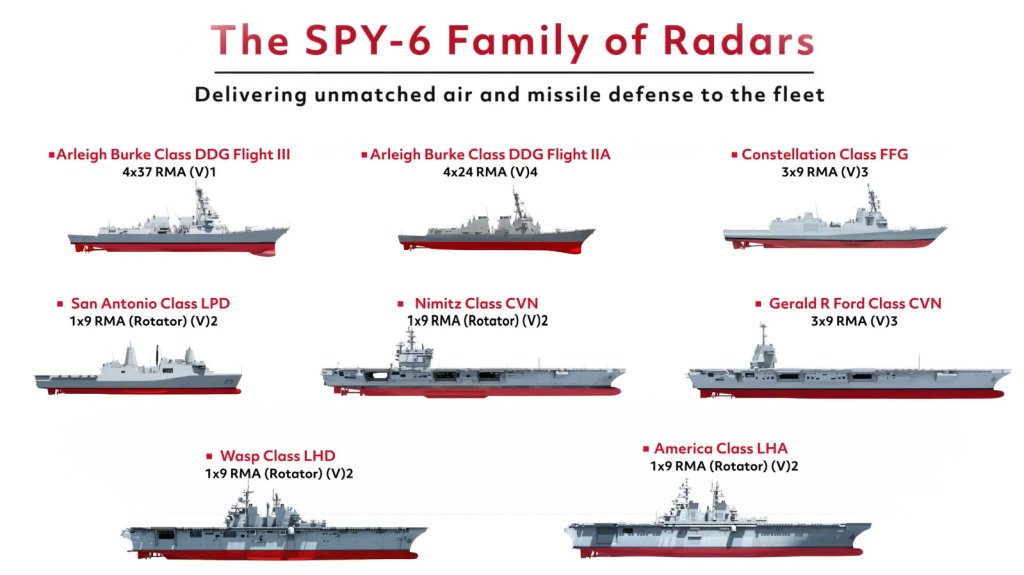
As an aside, the DBR was originally a core component of the Zumwalt class stealthy destroyer design, and was to be deeply integrated with the ship’s unique combat system, but suffered from similar technical and reliability issues in that setting, as well. The Navy subsequently decided to eliminate the S-band arrays on those ships as a cost-cutting measure. As it stands now, the USS Gerald R. Ford is the only ship the service expects to operate with the full DBR. The Navy has plans to eventually replace the DBR on that carrier with the EASR and other radars, too. Several variants of the AN/SPY-6 are also increasingly being integrated onto a host of different Navy ships, as seen in the graphic below.
The need for the Mk 95 illuminators on the Ford class could evolve further over time, including as the Block 2 ESSM enters more widespread service and with the development of the planned follow-on missile. TWZ has previously noted that the total number of Mk 95s has been reduced on at least some Nimitz class carriers for reasons that are still not entirely clear.
John F. Kennedy is also expected to bring along other important, but less visible improvements, which are set to be carried over to future ships in the class. This includes upgrades to the ship’s combat management system and a Block II version of the Navy’s Cooperative Engagement Capability (CEC) networked sensor architecture.
The Ford class program, overall, continues to face major delays and cost growth due to a host of technical issues and other factors that go well beyond problems with the DBR. The Navy had originally hoped to receive John F. Kennedy in 2022. Work on the next two ships in the class, the future USS Enterprise and USS Doris Miller, is also running behind schedule.
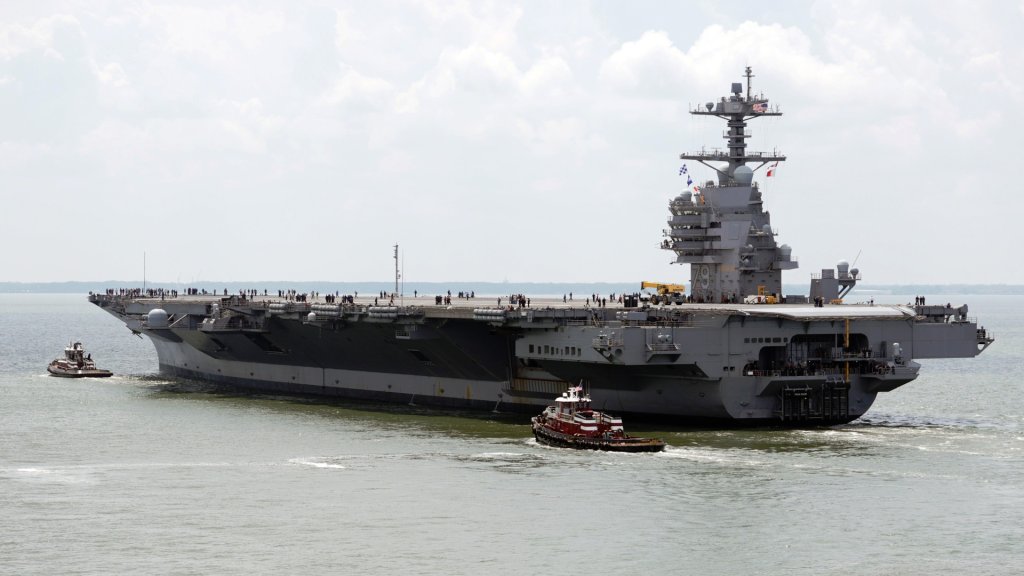
The Navy has said it is working to mitigate these ongoing issues and incorporate lessons learned in the construction of future ships in the class. The USS Gerald R. Ford has also now supported real combat operations, most recently as part of the conflict with Iran.
As highlighted in John F. Kennedy‘s recent sea trials, the Ford class design is already evolving in notable ways, particularly when it comes to the radar suite.
Special thanks to user @lfx160219 on X for bringing the Mk 95 radar illuminators on the future John F. Kennedy to our attention.
Contact the author: joe@twz.com
Loading comments…
Comments couldn’t be loaded. Please refresh the page.