
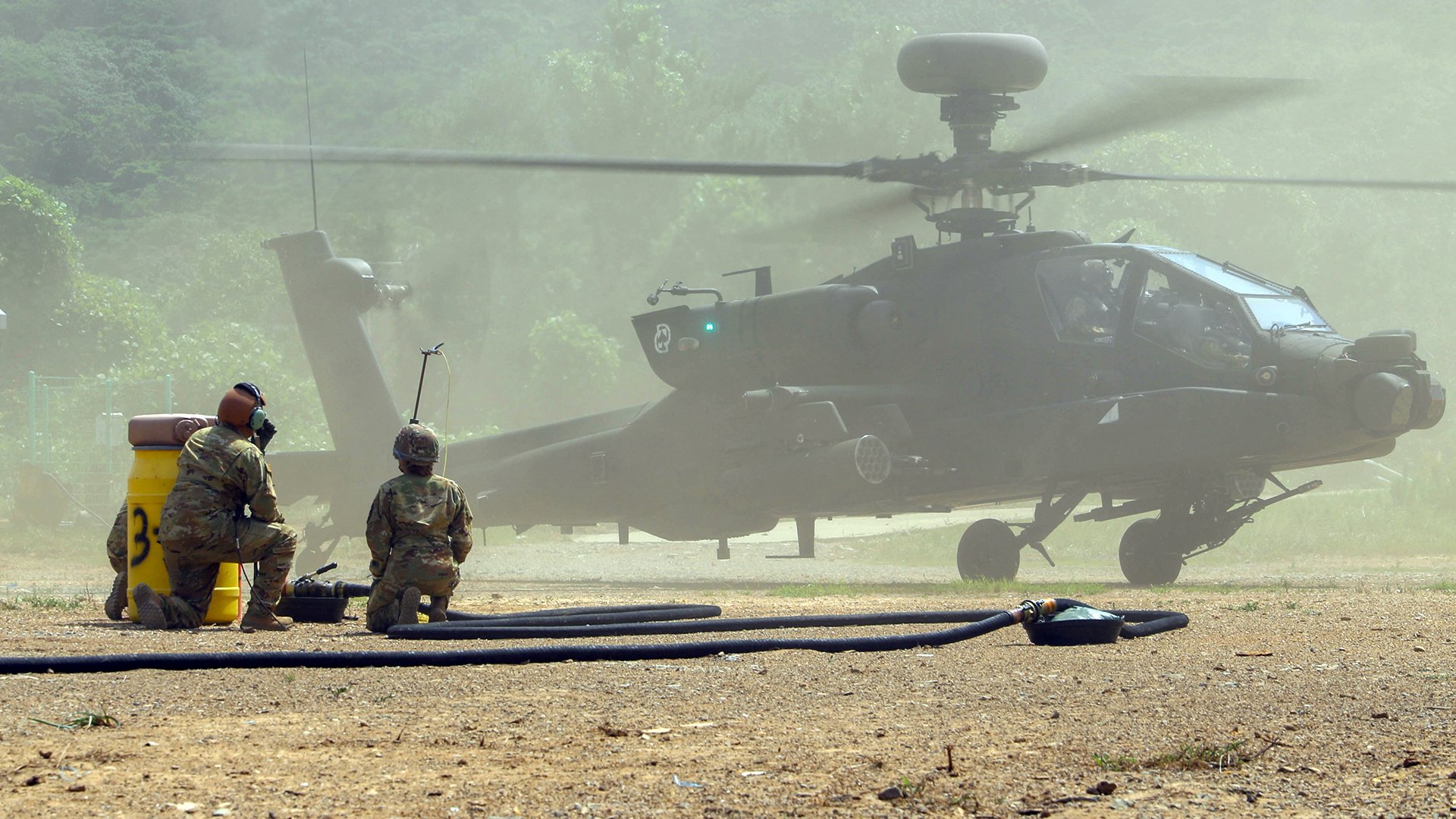
President Donald Trump doubled down on Monday about one of his reasons for ordering the Pentagon to “substantially reduce” joint military training exercises with South Korea. Trump said he is upset Seoul would not assist his war against Iran after years of U.S. protection from North Korea. This all started a day earlier in a Truth Social post where he said his close relationship with North Korean dictator Kim Jong Un and concerns about the cost of military exercises were motivating factors for his decision.
“South Korea has been protected by us for many, many years, and during my first term, they agreed to pay close to $3 billion a year for protection because they essentially weren’t paying,” Trump explained at an afternoon press conference. “And I asked them to do that at my request. They weren’t happy about it, but they agreed. I asked for $10 billion and they were very unhappy, but we agreed for a short term that it would be $3 billion, and next year would go up, and the next year would go up. So they start paying for their protection.”
That stopped when Joe Biden became president, Trump complained.
“When I called recently, the president of South Korea, who I like, I think he’s very nice actually. But I called him. I said, ‘Would you like to give us a little hand? We don’t need help with Iran, but if you’d like, give us a hand with Iran.’ He said, ‘No thanks.’ And I said, ‘Wait a minute. We have 39,000 soldiers over there guarding you from Kim Jong Un, your next-door neighbor, and you’re not going to help us on a very easy military operation in Iran. That’s strange.'”
Trump claimed South Korean President Lee Jae-Myung said, “No, no, we’d rather not get involved.”
“I said, ‘well, why are we involved in helping you?'” the American leader proclaimed.
Monday afternoon, the Pentagon said it “is actively working on executing the Commander-in-Chief’s directive” regarding the annual Ulchi Freedom Shield military exercise in South Korea. It already began on Monday as scheduled. When asked by TWZ for details about the timeline or how much U.S. support for the exercise will be reduced, the Pentagon declined comment.
South Korea’s presidential Blue House said it was reviewing Trump’s comments, adding that it would continue working with the U.S. on details related to the drills and the “maintenance of firm combined defense posture,” CNN noted.
There are about 28,500 U.S. troops on the peninsula and many have already begun preparation for the exercise, according to U.S. Forces Korea (USFK). While the U.S. has typically provided few details about how many of its troops take part in Ulchi Freedom Shield, there will be about 18,000 South Korean forces involved, which mirrors last year’s levels.
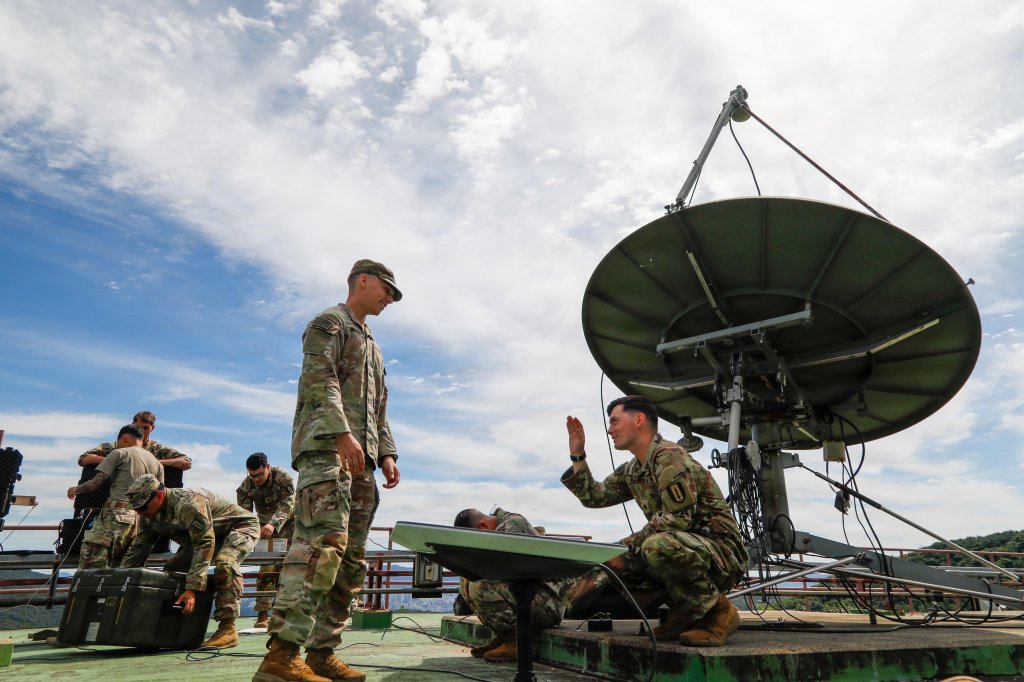
Scheduled to run through Aug. 27, Ulchi Freedom Shield is “a defense-oriented exercise featuring live-fire, constructive, and field training exercises that engage alliance forces and governmental agencies,” according to U.S. Forces Korea. This year’s drills were designed to reflect evolving threats from North Korea including drones, GPS disruption and cyberattack.
The goal is to “build understanding between Combined Forces Command, United States Forces Korea, the United Nations Command, and ROK Joint Chiefs of Staff (JCS), ROK government agencies.”
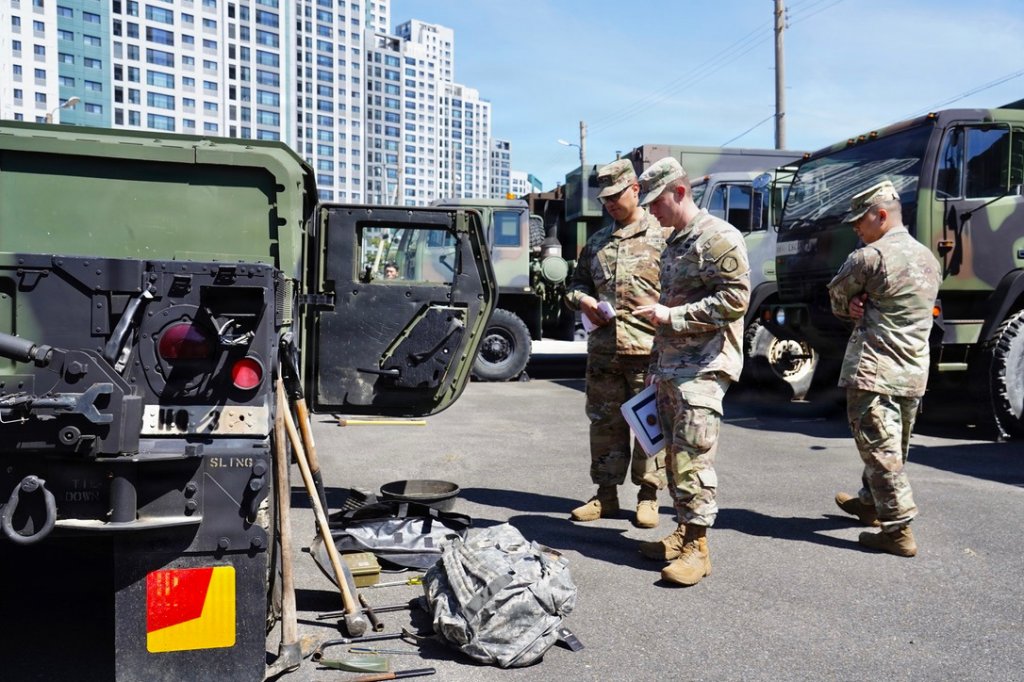
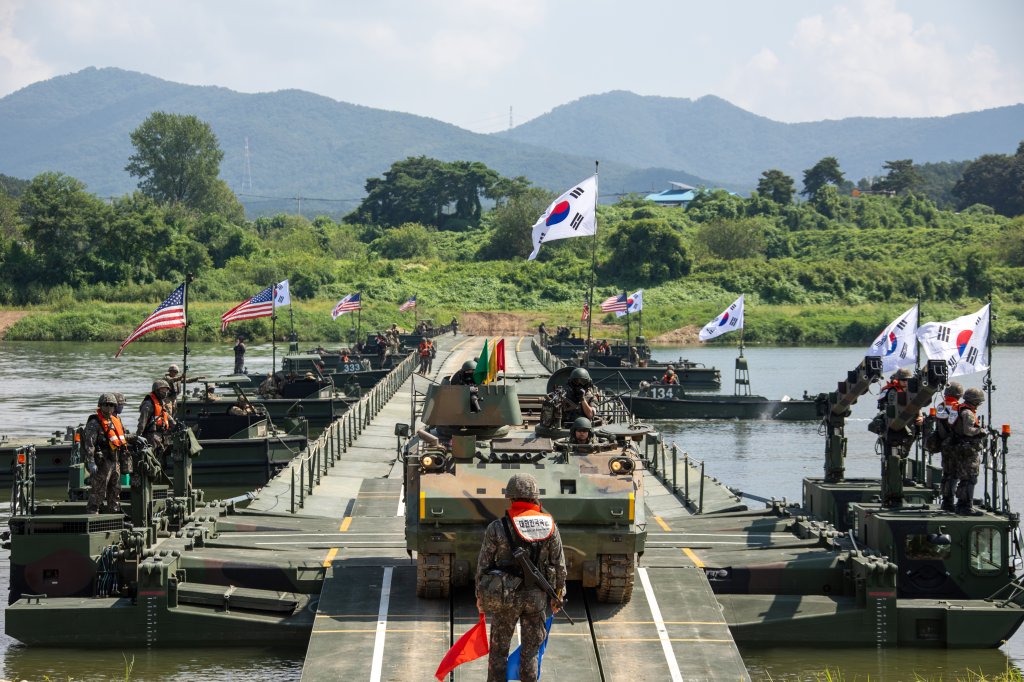
The exercise traditionally integrates ground, air, naval, space, cyber and information elements. It focuses on a wide range of training for urban warfare, counter Weapons of Mass Destruction, wet-gap crossing, air defense mobilization, tactical aviation dogfighting, contested logistics and combat search and rescue among many other aspects.
“This combined exercise program highlights the ironclad commitment between the two nations to maintain a robust combined defense posture and to defend the people of the ROK from any threat,” USFK said about last year’s exercise.
As noted earlier in this story, Trump said he ordered the rollback in U.S. participation in joint exercises on the peninsula as a result of his bonds with North Korea’s leader and concerns about cost involved. He also said South Korea’s decision not to provide more support for the war against Iran was a factor.
“Based on my very good relationship with Kim Jong Un, of North Korea, I am not happy with the fact that the United States has, long ago, agreed to participate in Joint Military Exercises with South Korea,” Trump stated on Truth Social. “These exercises are not only costly, with much of these costs paid for by the United States of America (as usual!), but send a signal that is totally inappropriate and hostile, to a Country that, as long as Donald J. Trump has been President, has been unthreatening and respectful. Therefore, and based on the fact that it is too late to cancel, I have instructed Secretary of War, Pete Hegseth, to substantially reduce the Joint Military Exercises!”
In addition, Trump proclaimed that: “While somewhat unrelated (?), I recently asked the President of South Korea if they would like to join us in the Denuclearization of the Islamic Republic of Iran, and they said, ‘No thanks!’”
Trump’s Truth Social post came days after North Korea fired a ballistic missile toward the sea off the Korean peninsula’s east coast as a message of protest against the looming training exercise. As we have noted in the past, joint exercises like these are typically met by missile tests and other saber-rattling from north of the border, although Ulchi Freedom Shield is a regular summer occurrence, albeit one that focuses closely on North Korean threats.
Last week, the South Korean military “fired warning shots after a group of North Korean soldiers crossed the inter-Korean land boundary, prompting them to return to their side,” the Yonhap News Agency reported on Sunday. “It marked the South Korean military’s first warning shots this year in response to North Korean troops crossing the boundary. No prior MDL violations by the North Korean military had been reported this year.”
Trump’s Truth Social post hit just as South Koreans – 13 hours ahead of Eastern Time – were starting their work week. In-Bum Chun, a retired South Korean lieutenant general who ran that nation’s special operations forces and is now a military analyst, told TWZ that Ulchi Freedom Shield is a “very” important event for South Korea. He suggested there will be mixed reactions to Trump’s move in the country, with people on the left favoring the move, people on the right seeing it as “a good reason for nuclear weapons” and moderates not taking a stand either way.
With plans to build its own nuclear-powered submarines with ballistic missile capabilities, Seoul is at least keeping its nuclear options open, which you can read more about here.
Meanwhile, South Korea’s president has proposed officially ending the conflict with the North. The Korean War, which erupted in 1950, has been effectively frozen since an armistice was signed in 1953.
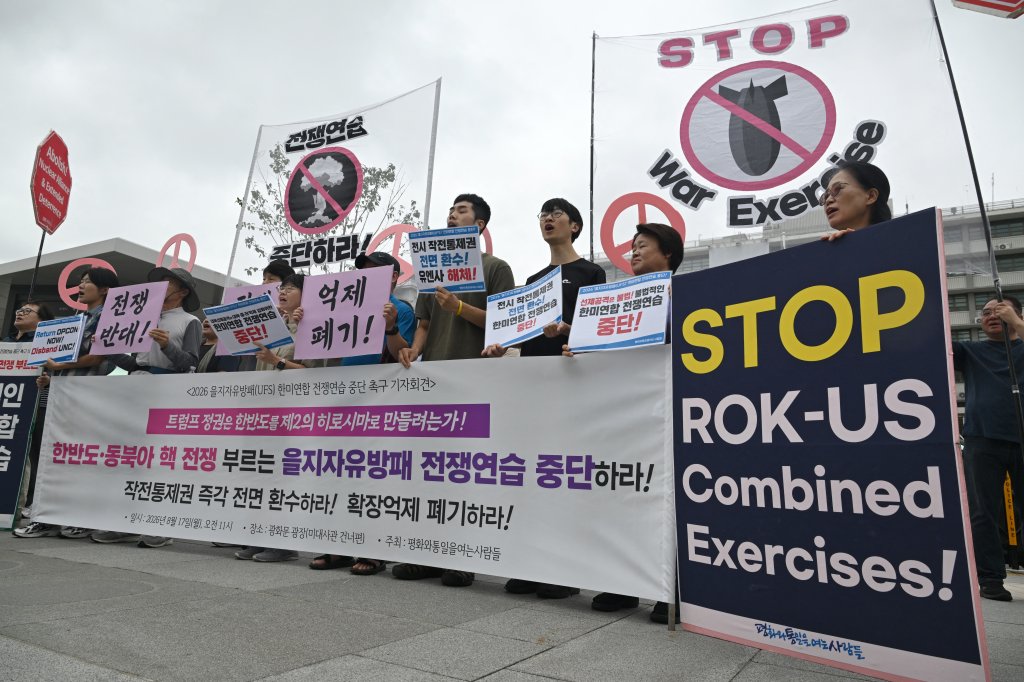
The president’s move toward a détente with the North is a repeat of previous actions toward Pyongyang. During his first term in 2018, Trump promised Kim that he would halt U.S.-South Korea military exercises, saying they are “provocative” and “tremendously expensive.”
In addition, he has also previously suggested reducing troop levels in South Korea. While his Truth Social post didn’t raise that issue, earlier this year, the Pentagon moved air defense assets from South Korea to the Middle East to help defend against Iranian missile and drone barrages. It is unclear if those systems have been returned.
Given the ongoing presence in the Middle East, the U.S. military is under strain, which is likely an unspoken motivating factor as well for the move to curtail training with South Korea.
There is growing concern among Asian allies about Trump’s commitment to the region. In January, the National Defense Strategy was unveiled and no longer focused primarily on countering China — a dramatic shift from even the first Trump administration. Last week, Trump ordered the USS George Washington, the only aircraft left in the western Pacific, to head toward the Middle East to relieve the beleaguered USS Abraham Lincoln. The Lincoln is at the center of a controversy over the mental and physical health conditions of those aboard after a long deployment.
America’s strongest ally in the region, Japan, is forging closer relations with South Korea over growing anxieties about U.S. reliability.
The two countries’ “exposure to a nuclear-armed North Korea, adds urgency to moving the relationship beyond its current surface-level fence-mending,” the East Asia Forum recently noted.
Faced with concerns about the future of U.S. commitments, as well as growing tensions with China, Tokyo is undergoing its largest military buildup since World War II.
Meanwhile, in an issue that has spanned several U.S. administrations, there is a large backlog in the amount of U.S. military aid promised to Taiwan. Under the Trump administration, however, there is growing distrust in Taiwan about whether America will come to its aid should China invade.
It is unclear why Trump is once again making overtures to Kim. Today at the White House, he said that the North Korean leader has responded to his request for a conversation, though he offered no further details.
How a reduction in U.S. participation in training exercises Kim sees as a direct threat will affect the North Korean leader’s actions remains unknown. As we have frequently reported, he is building up his military, including his nuclear arsenal and ballistic missiles and has sent his troops to Russia, gaining experience fighting Ukraine.
During his first term, Trump sent three aircraft carriers to patrol the waters off the peninsula after a 2017 Pyongyang ballistic missile test and promised to unleash “the fire and fury” of America’s nuclear arsenal on North Korea. While that eventually spurred three face-to-face meetings between Trump and Kim, there was no change in the North Korean leader’s ambitions and his nuclear program only grew.
Contact the author: howard@twz.com
Loading comments…
Comments couldn’t be loaded. Please refresh the page.