
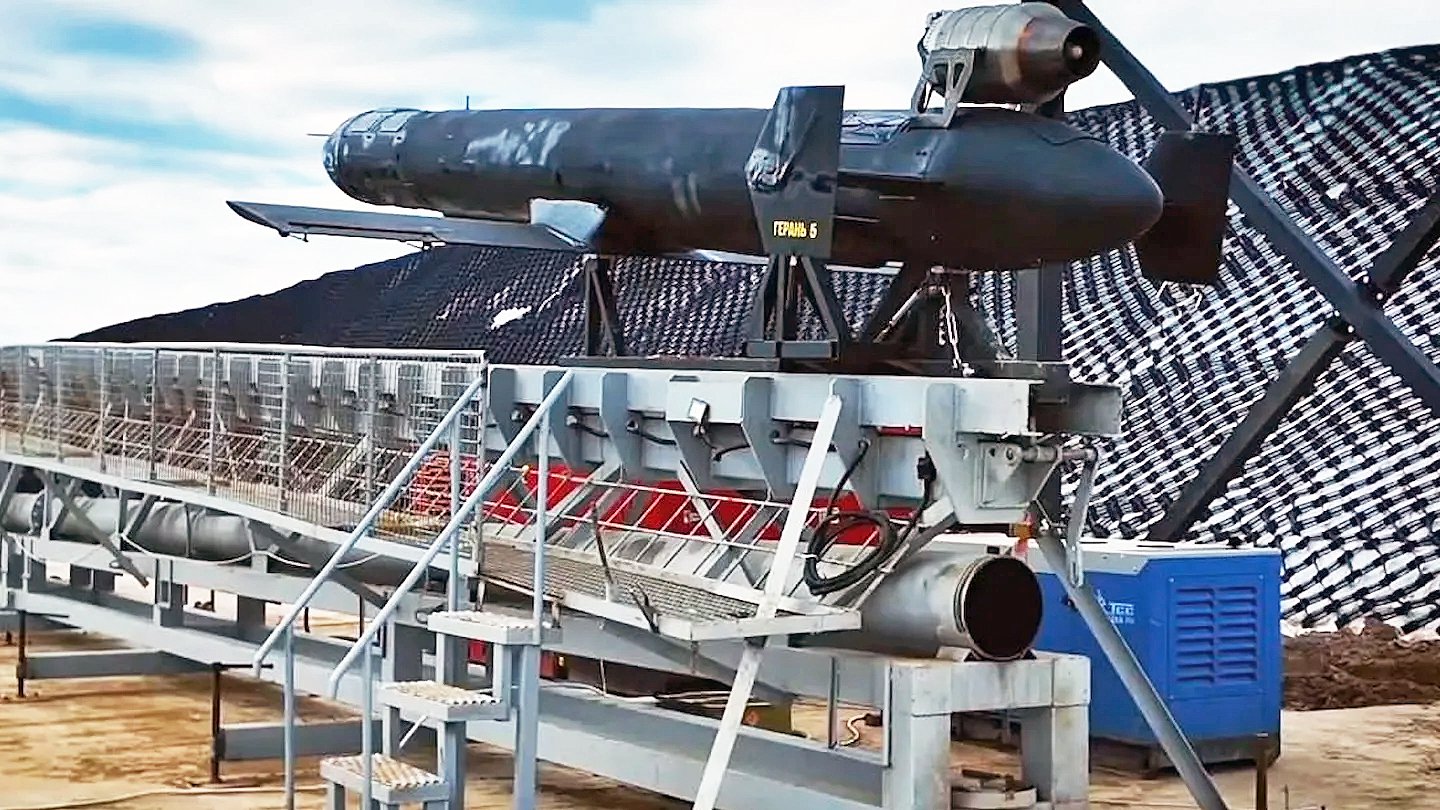
Commercial satellite imagery shows Russia has been expanding the dedicated launch infrastructure for its long-range one-way attack drones, including newly constructed extended rails apparently intended to accommodate larger, newer Geran variants. The construction provides concrete evidence that Moscow is increasing its ability to stage and launch larger numbers of long-range strike drones from dispersed locations near Ukraine and Belarus. The launch sites also bring more NATO territory within the drones’ reach.
An investigation by The Telegraph, based on commercially available satellite imagery and analysis by drone-intelligence firm DroneSec, identified at least 10 Russian sites with newly constructed or expanded drone-launch infrastructure. The investigation counted at least 59 launch rails, roughly 20 of which were assessed to be long enough to support newer Geran-type drones. Open-source tracking data indicated that seven of the 10 sites had been used in Russian attacks on Ukraine.
Some of the facilities have been converted from existing military bases and civilian airfields, while others have been constructed in remote areas.
At Tsymbulova in Russia’s Oryol region, for example, commercial satellite imagery shows four launch rails, including two measuring roughly 280 feet. Construction of the extended rails was visible beginning in late 2025. Business Insider independently reported on the facility in April 2026, citing imagery from U.S. satellite-intelligence company Vantor.
More recent imagery reportedly shows the Tsymbulova facility with 16 launch positions, as well as dozens of drones and additional support infrastructure. Storage buildings and other structures have also been constructed at the site, consistent with an expanding ability to stage large numbers of drones before launch. Some of the facilities have storage capacity for more than 1,000 drones, The Telegraph reports.
The longer rails have been assessed as being associated with Russia’s newer Geran-4 and Geran-5 variants, which represent a further evolution of the long-range one-way attack munition concept. There is also the possibility that these rails will be used to launch other heavier types with less range, too. This would be of considerable utility for Russia, as they have worked to max out the effects of the warheads on the Shahed-136/Geran-2, and their destructive power is limited to certain target types. Harder-hitting drones with heavier warheads but less reach would reduce the need to expend far more expensive and less numerous ballistic missiles and cruise missiles to hit target types that lay outside of the capabilities of the Geran-2/Shahed-136.
Case in point, the Geran-4/5, these jet-powered drones are faster and more survivable. They are also able to carry substantially larger payloads than Shahed-136/Geran-2s. The exact performance of the newer systems remains difficult to independently establish from open-source evidence. According to the Ukrainian Ministry of Defense’s Main Directorate of Intelligence (GUR), the Geran-5 has a length of around 20 feet and a wingspan of approximately 18 feet. Overall, the drone’s payload weighs around 200 pounds, which is multiplied times that of a Shahed-136, and it is thought to have a range of around 620 miles.
While the heavier jet-powered one-way attack munitions may lack the range of the earlier propeller-driven Geran-2, which can hit targets at around 1,200 miles, this reach is not needed to strike targets even deep inside Ukraine, where payload maximization and reduced chances of interception are increasingly higher priorities. The jet drones allow for easier penetration, including at altitude, meaning they can operate outside the reach of lower-tier air defenses, ranging from SHORADS to drone interceptors. The Geran-4/5 can also be used at lower levels, depending on the area they are trying to penetrate.
The infrastructure expansion is occurring alongside a dramatic increase in Russian drone production. Russia adapted the Iranian-designed Shahed-136 into the Geran-2 and subsequently established large-scale domestic production. TWZ has reported that Russian output has reached thousands of Shahed/Geran-family drones per month, with production at the Alabuga complex potentially exceeding 50,000 annually in 2026. Earlier estimates put Alabuga production at roughly 2,000 drones per month, with plans to increase output to 5,000.
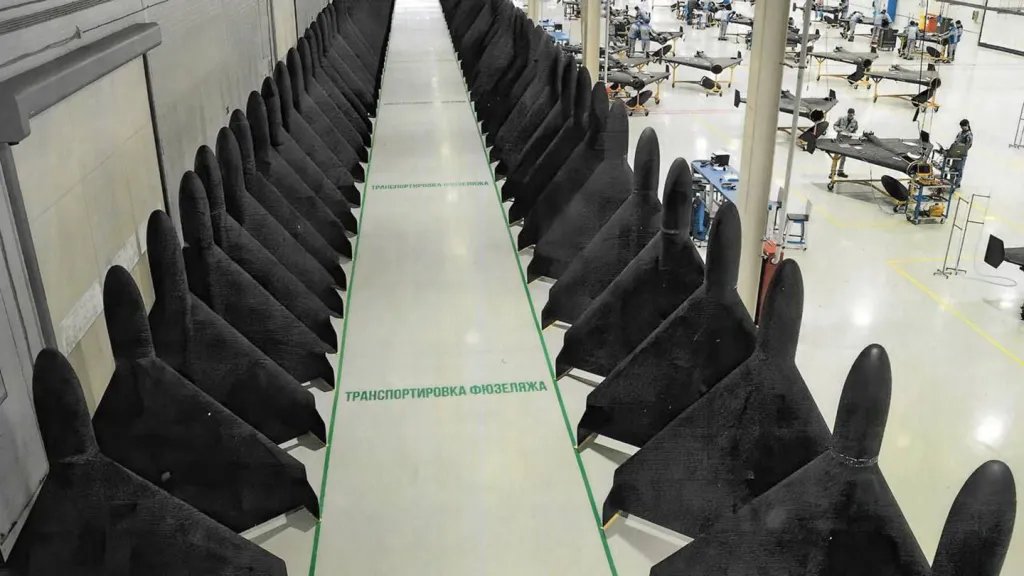
The expanding production capacity has transformed the Geran from a relatively limited weapon into the central component of Russia’s long-range strike campaign against Ukraine. TWZ has documented the progression from relatively small numbers of Shahed attacks over the winter of 2022-23 to barrages involving hundreds of drones and, by 2026, more than 1,000 in a single 24-hour period. The ability to manufacture the weapons in large numbers allows Russia to sustain repeated attacks and force Ukraine to expend scarce air-defense interceptors against comparatively inexpensive targets.
Satellite analysis indicates that Russia launched about 16,000 long-range drones against Ukraine in the period between January and March 2026, roughly 6,000 more than in the same period of 2025.
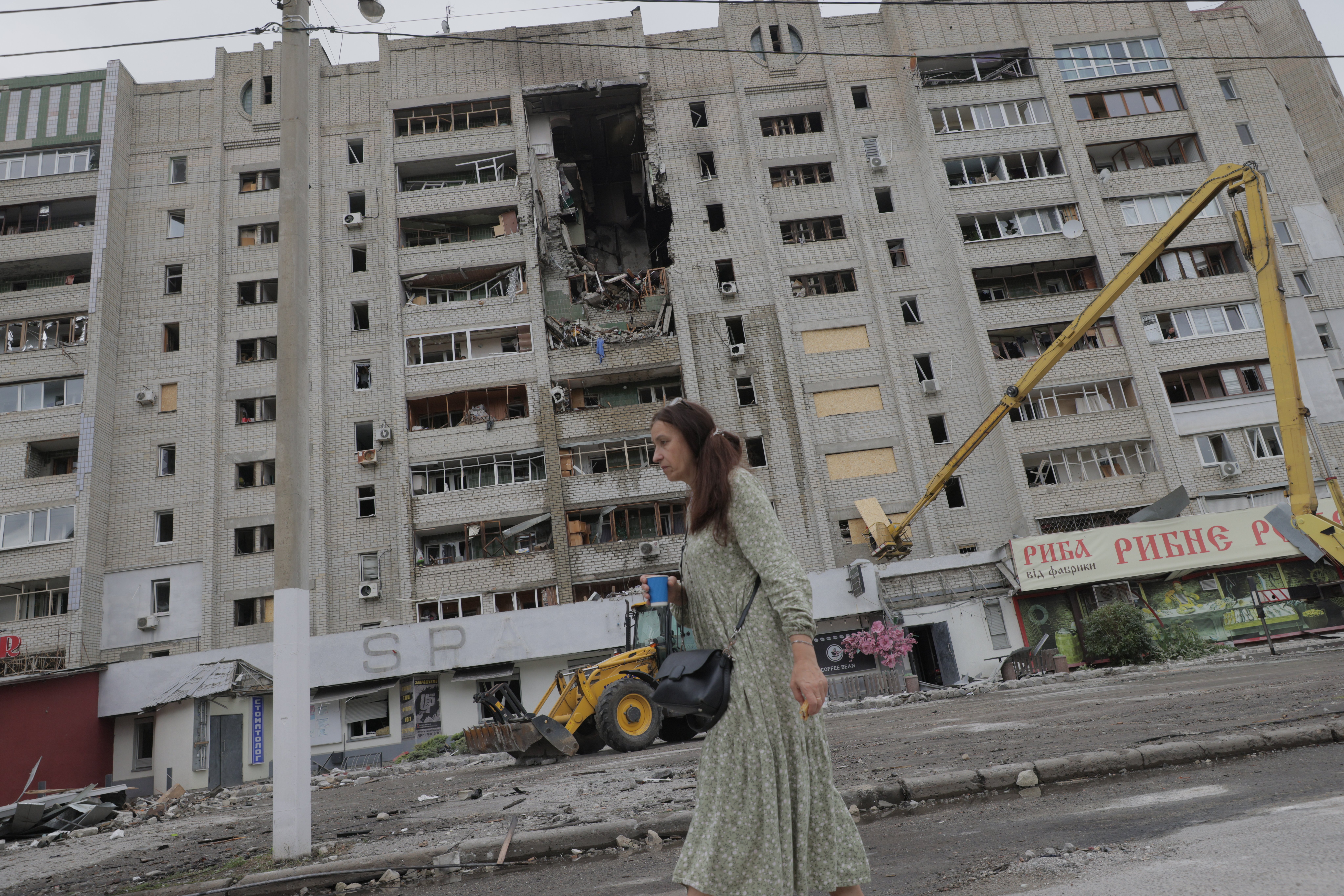
The attraction for Moscow is not simply range. Geran-type drones are sufficiently inexpensive to be expended in large numbers, and this cost-exchange reality forces Ukraine to balance the cost of defending against them against the much lower cost of Russia producing the drones in the first place. At the same time, the drones are critical to Russia since it cannot produce legacy standoff weapons at anywhere near the same scale, especially after years of sanctions and war.
Meanwhile, the expanded launch network also changes the geography of the threat. Some of the newly developed sites are close enough to Russia’s western borders that, depending on the actual performance of the newer drones, parts of Poland could fall within their theoretical reach. The entirety of the territory of the Baltic States would also be covered, placing a highly exposed and strategic part of NATO’s eastern flank under the potential threat of mass drone attacks.
While that does not demonstrate an intention to attack NATO, it does give Moscow additional options should the conflict broaden.
The development comes as NATO faces a wider range of Russian activity below the threshold of open warfare, including cyber operations, sabotage, GPS/electronic interference, drone activity and other “gray zone” measures on NATO’s territory. Earlier this month, Lithuania warned that Russia was considering a staged attack against that Baltic region, and the Baltic States, as well as Poland, have all stepped up security measures around dams, power plants and other critical infrastructure, amid fears of a false-flag operation, likely using drones.
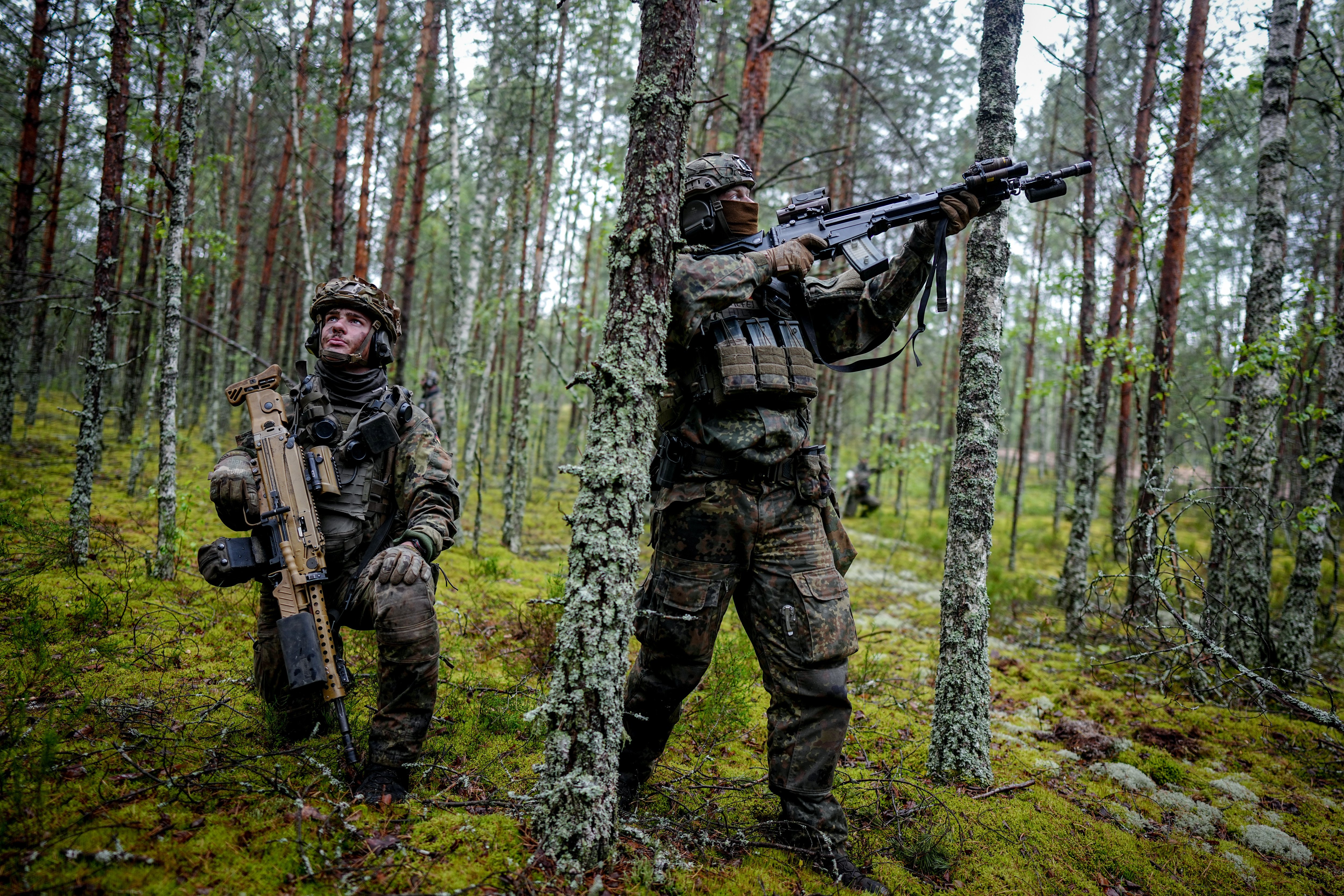
A NATO official told The Telegraph that drones, more generally, have “fundamentally altered the character of modern warfare” and that the alliance is expanding its ability to produce, operate and neutralize drones at scale.
It’s worth considering that these Russian drone launch facilities are far from being invulnerable “secret bases.” Ukraine knows where many of them are and has attacked launch sites in the past. However, disrupting drone launch operations, in general, has proved difficult. In addition, by using mobile launchers mounted on pickup trucks, Russia can conduct launches from any location, employing “shoot and scoot” tactics to avoid attack, as seen in the video below.
Even in a hypothetical Russian strike campaign against NATO, one-way attack drones would represent the center of mass of a much broader Russian deep-strike arsenal. Moscow retains ballistic and cruise missiles, air-launched weapons, and other long-range systems, which would be prioritized for high-priority and better-defended targets.
While it does not constitute the emergence of a standalone strike capability, the expansion of Russia’s Geran infrastructure adds a potentially significant mass-attack layer to an already diverse Russian long-range strike arsenal.
Contact the author: thomas@thewarzone.com
Loading comments…
Comments couldn’t be loaded. Please refresh the page.