
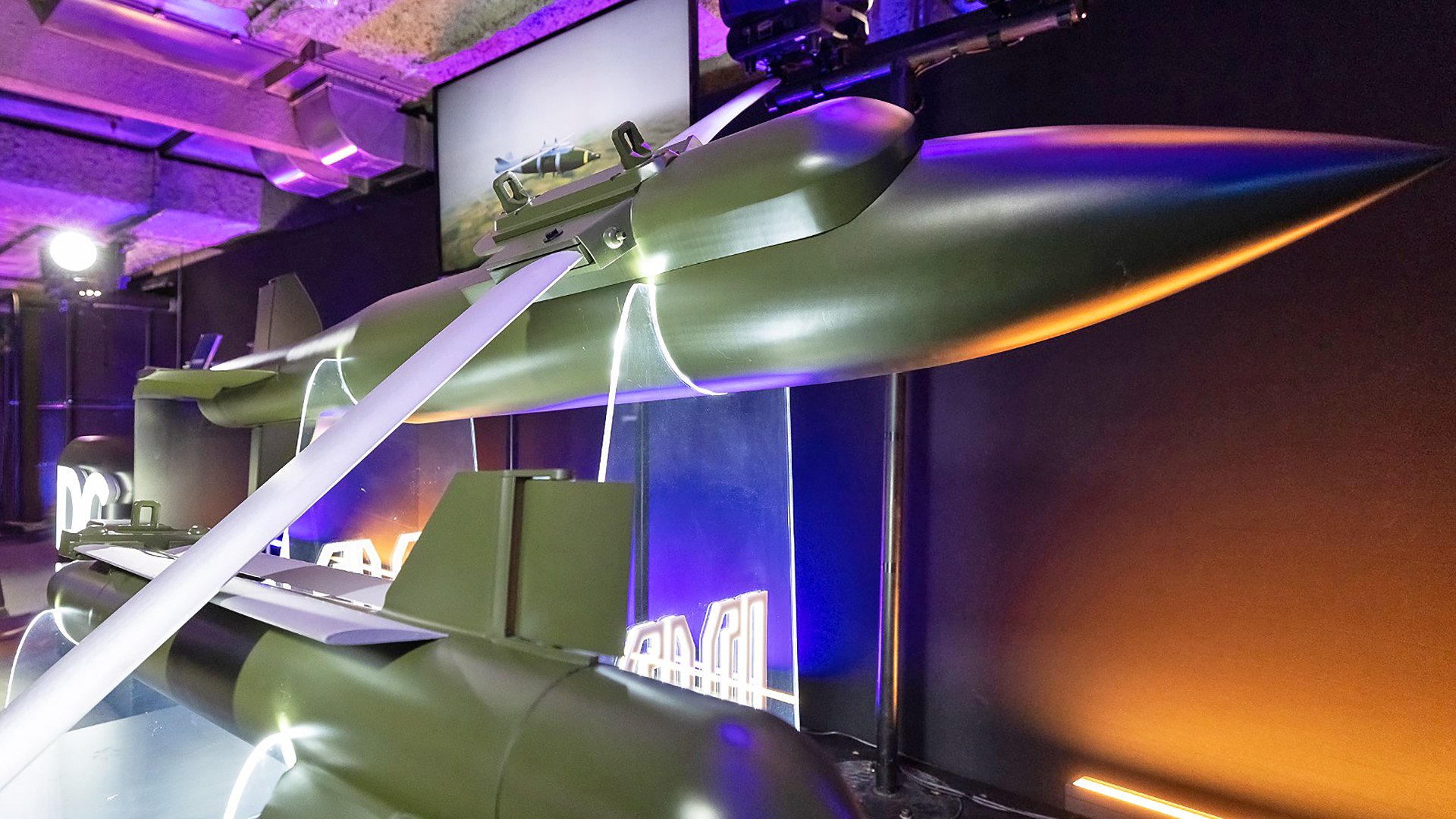
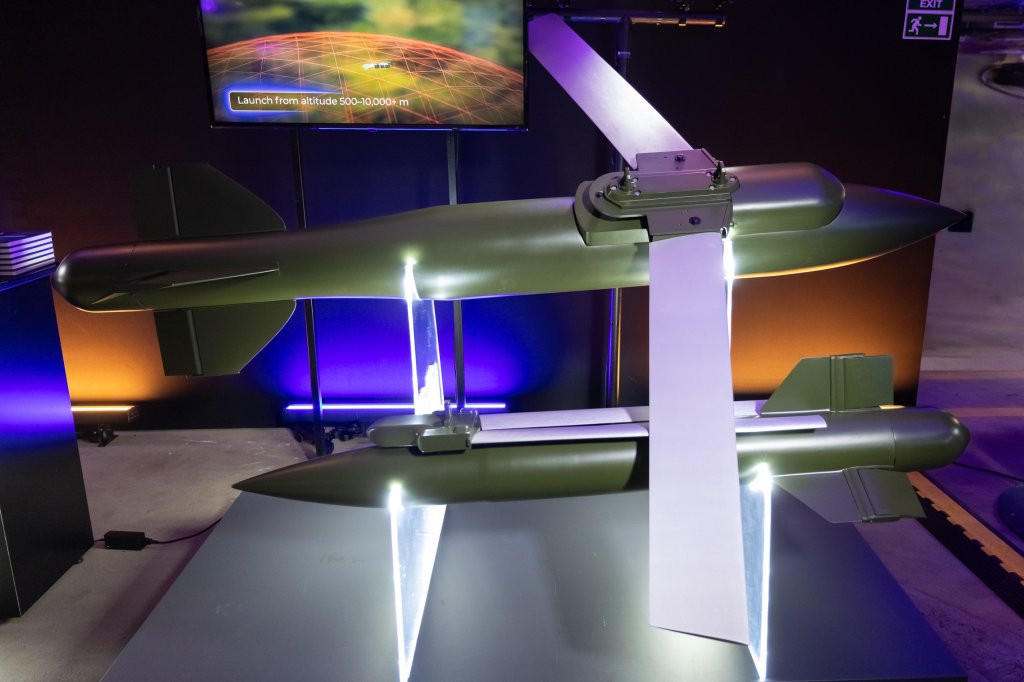
As its defense against Russia grinds on and with the future of foreign military assistance never assured, Ukraine is ramping up procurement of its new, domestically produced “Equalizer” aerial glide bomb, according to the Ukrainian military. Brave1, the Ukrainian defense technology incubator, on Tuesday provided us with some new details about this weapon, which extends the range and accuracy of so-called dumb bombs by adding guidance kits and pop-out wings.
Also known by its Ukrainian name “Vyrivniuvach,” this bomb first broke cover in May, which you can read more about in our initial story on the topic here. It was developed by the Ukrainian company DG Industry with the Brave1’s support.
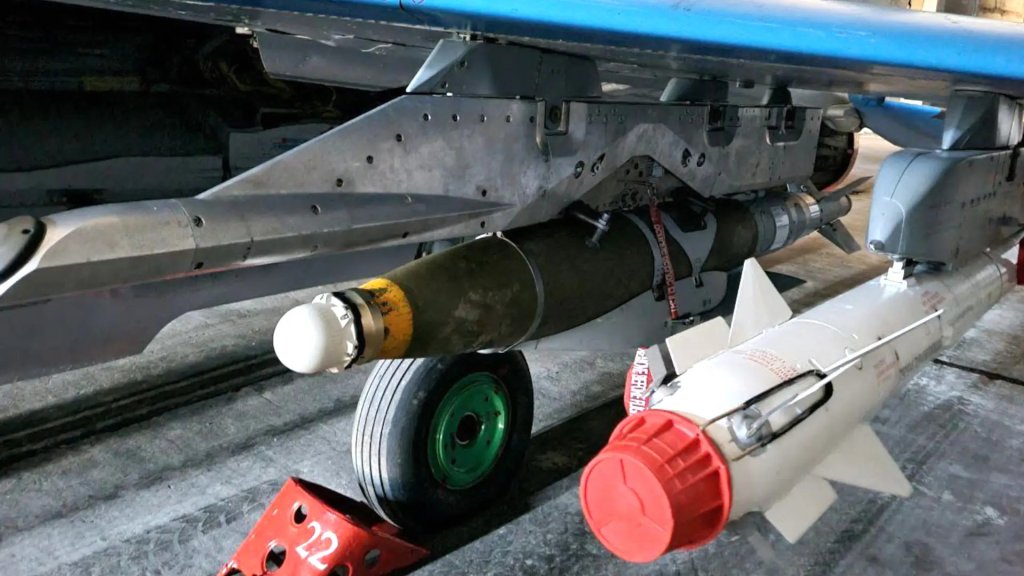
While glide bombs have been used to great effect by both sides, Kyiv has had to rely on donated weapons like the U.S.-made Joint Direct Attack Munition-Extended Range munition (JDAM-ER) and the French-made AASM-250 Hammer bomb. The Ukrainian Air Force also makes extensive use of the U.S.-supplied Small Diameter Bomb (SDB), which is smaller and also has pop-out wings.
The Ukrainian Air Force began launching JDAM-ERs in March 2023 and SDBs that November, though the use of the latter wasn’t officially confirmed until May 2024. The weapons became critical for striking Russian targets over the front lines because they allowed Ukrainian jets to release them from standoff distances and to better avoid Russian air defenses.
Russia, meanwhile, produced its own crude glide bomb earlier in the war and it has become a highly problematic and deadly threat for Ukraine to contend with since. Now Ukraine is building its own.
As we noted in our earlier piece, the weapon had cleared trials and is ready for combat, giving Ukraine a domestically produced standoff munition that could augment its current arsenal of donated ones and provide a more secure supply chain given the uncertain nature of foreign assistance. One of our outstanding questions at the time was whether the Equalizer would have independent propulsion, a modification that provides this class of munition with a significant boost in range beyond the “dozens of kilometers,” Brave1 claims it can reach. By comparison, the stated JDAM-ER range is more definitive, able to hit targets about 45 miles away.
Russia last year introduced a small turbojet engine to its glide bombs, with claims that this has boosted range to at least 60 miles. Ukraine says it is developing that capability as well, with the goal of reaching targets as far as 125 miles away.
It’s worth noting that Ukraine’s French-supplied Hammer precision-guided bombs also feature a rocket booster. This feature is of unique utility for Ukraine, which often slings its glide bombs via pop-up launch profiles from low levels executed by its fighter and attack aircraft. This is due to the extremely heavy air defenses near the front lines.
You can see a Ukrainian MiG-29 launch two Hammers in the following video.
The Equalizer “has no motor,” a Brave1 spokesman told us.
“A major challenge was the lack of an engine, as navigation and control rely entirely on the bomb’s own inertia and aerodynamics,” he explained. “Naturally, this demands precise calculations, structural balancing, and extensive testing.”
“The main difficulty lay in combining several critical factors: speed, high g-forces, and aircraft integration,” the Brave1 spokesman added. “This is precisely the type of system where even millimeters are critical, and choosing the right components directly impacts the structure’s effectiveness and resilience.”
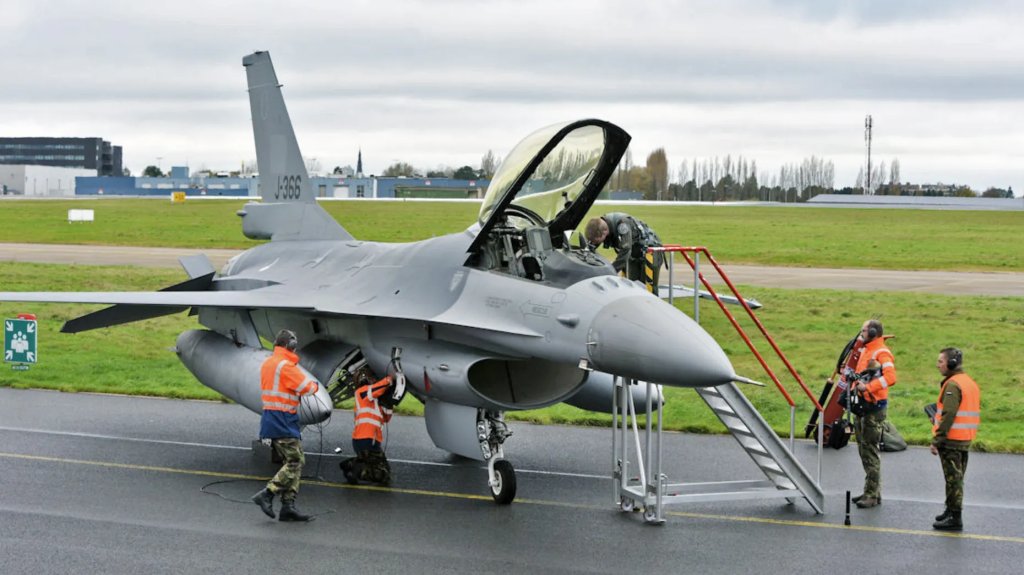
“The weapon was designed with high-precision targeting and compatibility with current Ukrainian aircraft and systems,” the spokesman stated. While designed for Ukrainian Su-24, Su-27, and MiG-29 jets, it can also be used with donated F-16 and Mirage fighters, though it “has to receive additional certification for usage on F-16s and Mirages.”
“The bomb also has modern guidance algorithms that promote better targeting and accuracy,” he noted, without providing additional details.
“Structurally speaking, the product differs from both Russian and foreign counterparts,” the Brave1 spokesman added. “During development, the developers researched existing systems, incorporating real combat experience and feedback from the military. As a result, the product integrates all the advantages of existing solutions while addressing their shortcomings.”
He declined to elaborate, but highlighted that “everything—from the wings to the flight controller software—was developed in Ukraine, with the exception of the chips and microcircuits. In terms of the component base, approximately 90% consists of Ukrainian, European, and American parts. Overall, the company managed to avoid critical dependence on foreign components.”
Ukraine began developing the Equalizer two years ago over concerns about the future flow of arms into the country, the spokesman said. Given that with the war dragging on, the U.S. has stopped donating weapons to Ukraine and other nations, like the Netherlands, have as well, it was not an academic exercise.
“In 2024, a team of developers asked themselves a practical question: what happens if foreign arms supplies stop?” the Brave1 spokesman proffered. “Ukraine needed its own capabilities to help its military carry out combat missions independently. That marked the beginning of their mission to develop a domestic guided aerial bomb.”
“By May 2025, following a series of successful tests, the team proved the concept was viable and decided to move forward,” the Brave1 spokesman added. “They transitioned to producing the initial prototypes and scaling up manufacturing. Naturally, it was a gradual process—the team continued refining the product and fine-tuning specific technical solutions, work that remains ongoing to this day.”
“Brave1 supported this project from its inception in 2024,” the spokesman stated. “We aim to back innovations right from the start because it gives teams a real shot at success. We recognized the chance that the project would reach completion and prove its capabilities quickly, but we were equally aware it might take much longer. In the end, going from concept to the first working prototype took 17 months.”
DG Industry is one of “at least eight manufacturers working on glide bombs altogether,” he noted.
“The guided aerial bomb itself isn’t just a single product—it represents a technology that has now emerged in our country,” Yaroslav Vinnytskyi, Head of Defense Technologies at Brave1, told us. “It will continue to evolve, and its application can be scaled across various types and sizes. Mastering this technology is a major milestone, providing additional capabilities for both manufacturers and the armed forces.”
Beyond seeking supply independence, by developing its own weapons like Equalizer, Ukraine won’t have to worry about preclusions placed on their use by foreign donors, something that happened with several weapons systems, though the limits ebbed and flowed.
As we noted earlier in this story, the Equalizer “is already being officially purchased for supply to the Armed Forces of Ukraine,” Colonel Vladyslav Voloshyn, head of the Central Department of Innovation Activities of the Armed Forces of Ukraine, told the Ukrainian Ukrinform media outlet.
Voloshyn noted that Russia has increased its daily use of glide bombs from about 180 last year to more than 300 this year. It remains unknown when the Equalizer will arrive on the battlefield for Ukraine at scale, or when the other options will either.
Given what these weapons can bring to the table if they truly work as advertised, for Kyiv they cannot come soon enough.
Contact the author: howard@twz.com
Loading comments…
Comments couldn’t be loaded. Please refresh the page.