
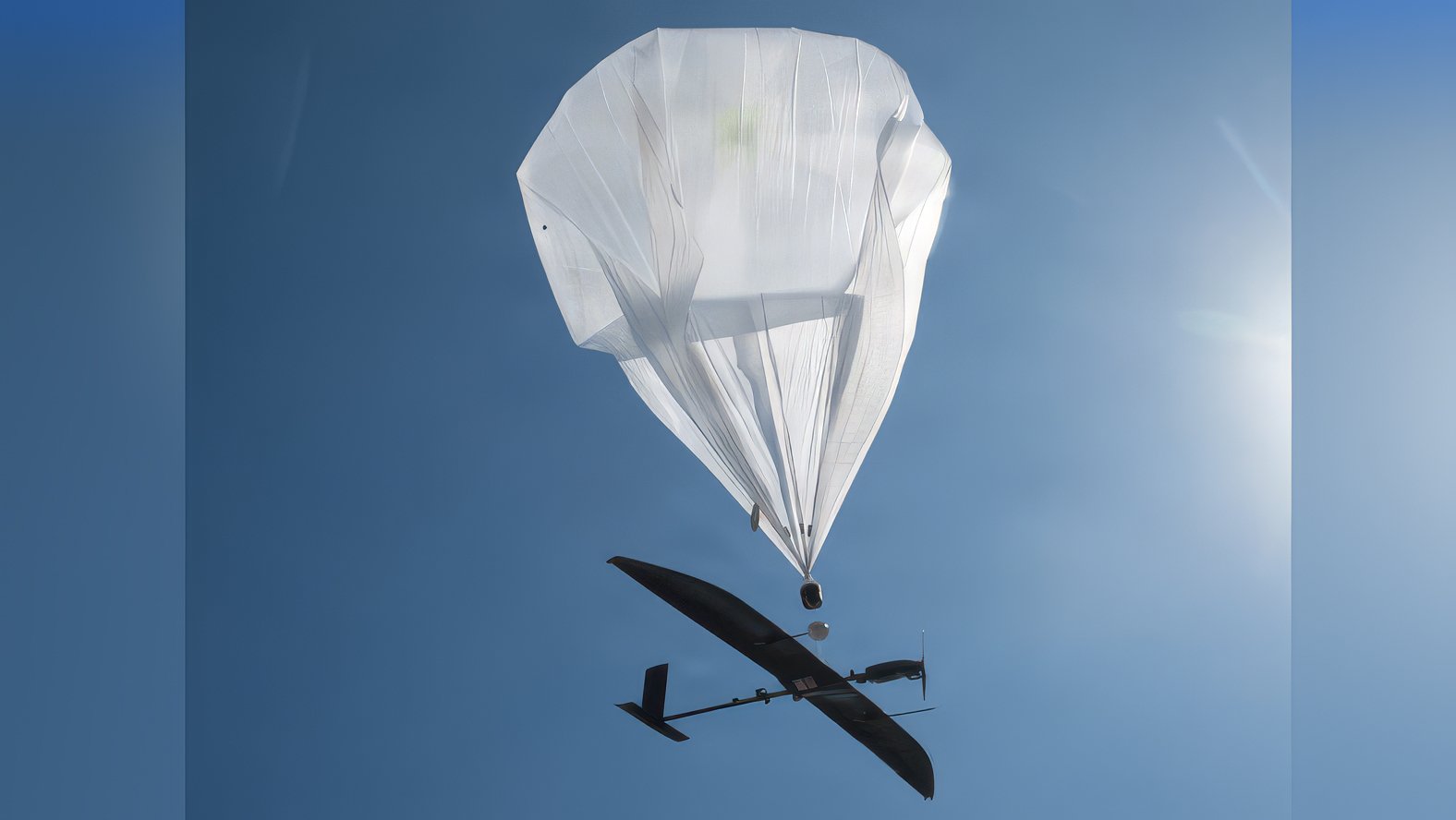
As he prepares for a potential future conflict on the continent, the commanding general of Multi-Domain Command Europe told TWZ that he envisions dispersing hundreds of high-altitude balloons at a time. The balloons, Brig. Gen. Steven Carpenter explained, would be used for a wide range of purposes, from serving as communications platforms to launching weapons. For years now, TWZ has been closely tracking the expanding use of high-altitude balloons and other lighter-than-air systems globally for intelligence gathering, networking, as platforms for launching drones, and in support of other missions.
Basically, in the European scenario, hundreds or possibly thousands of balloons would be sent east. They would provide attritable real-time reconnaissance, strike, and decoy capabilities, while also acting as a force multiplier for other assets by providing a resilient active network over the battlefield — one that could help fill in the gaps if the space-based layer gets degraded.
“We would like to proliferate the stratosphere with high-altitude balloons, but I mean 200, 300 at a time,” Carpenter told us during last week’s Association of the U.S. Army (AUSA) conference in Washington, D.C., which TWZ attended. The Army would utilize high-altitude balloons “not only as decoys, a lot of decoys, but also communications retrans[mission platforms], electronic sensing, as well as electronic attack, and then obviously air-launched effects to be able to drop them down and use kinetic means as well.”
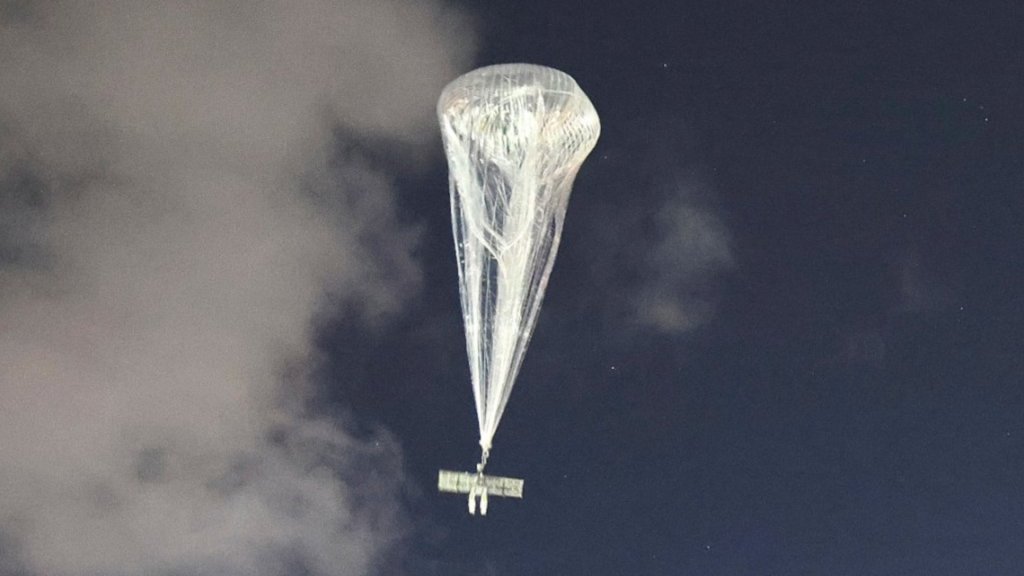
Air-launched effects (ALEs) is a collective term the U.S. military now commonly uses to discuss air-launched drones configured for a wide array of missions. The ALE umbrella encompasses designs that can be used for surveillance and reconnaissance, electronic warfare tasks, or signal relay, and can act as decoys. It also includes loitering munitions often referred to as kamikaze drones, capable of carrying kinetic attacks.
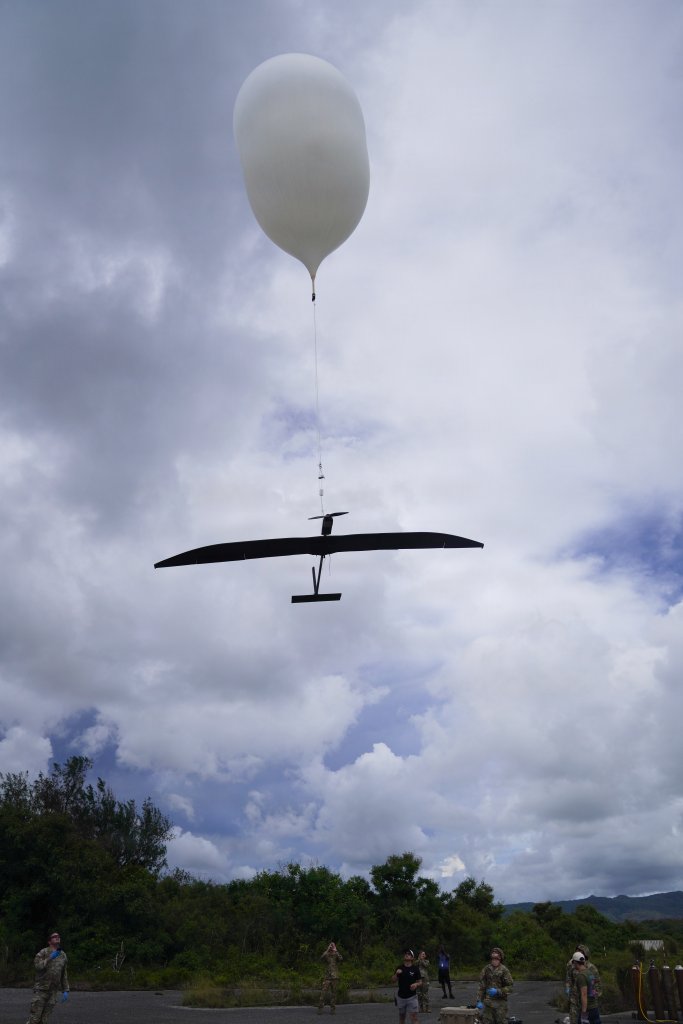
In general, modern high-altitude balloons offer persistent deployment that can last for days, weeks or even months at a time. After navigating to an assigned operating area, some modern balloon systems can hold their position, in spite of prevailing winds, by modulating their altitudes to keep on station.
In addition, high-altitude balloons operate at heights providing excellent fields of view for radars, cameras, and other sensors in all directions and across very broad areas. From a perch of 60,000 feet or more, they also offer a way to peer into certain denied areas while still soaring in international airspace and keeping farther away from potential threats. During a conflict, the balloons could be deployed deep into enemy airspace as they are attritable.
Though some balloon systems can hold their general positions in many circumstances, Carpenter told us that seasonal weather changes will still play a role in deployment.
“The flight paths are different. We study that,” he noted. “We understand during what seasons where the best places are to launch those high-altitude systems, and then again to hold enemy cities and capabilities at risk at any time, so that we can defeat them at the time and place of our choosing.”
We asked Carpenter for more details about how he sees balloons being used by troops in Europe.
“I think everybody knows there’ll be a point where satellite communications are going to be degraded, if not eliminated,” he stated. “One of the things that we’re focusing on is in the stratosphere, so above 60,000 feet up to 80,000 feet, which is next to impossible to target unless you’re using one of your exquisite systems, fifth-gen fighters, SA-21 Bravo [S-400 Triumf surface-to-air missile system], etc. to shoot that stuff down.”
Many of the balloons would be equipped with Link 16, a NATO-standard tactical datalink communication system central to U.S. and allied military operations, the general said. Link 16 allows coalition forces to seamlessly transmit and exchange real-time situational awareness data. You can read more about how Link 16 works, and its increasing dependence of space, in our story here.
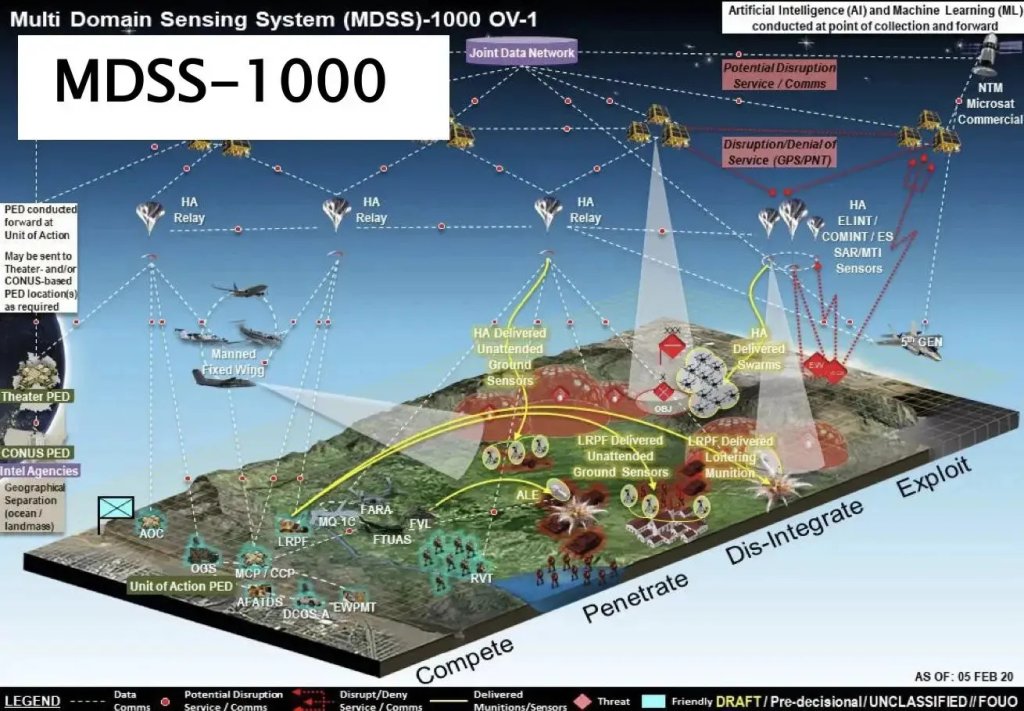
As for using balloons as ALE delivery platforms, Carpenter told us there are “different technologies, different altitudes that we’d have to deliver those from” at “different ranges, different levels of yield or lethality. But for us, it’s really just a single arrow in a quiver full of arrows, utilizing space capabilities, cyber capabilities, or surface-to-surface capabilities. In this case, you’re talking just another air-to-surface capability with your air-launched effects off balloons.”
Carpenter said that when it comes to balloon-launched ALEs, he is looking at “everything from shorter range, lower yield, maybe targeting an adversary ballistic missile radar, to longer range, higher yield capabilities that you might use to maybe take out a ballistic missile system.”
In such cases, the balloons would carry drones deep into enemy territory, where they would be launched opportunistically to strike the targets Carpenter suggested. The size of the target, and how well it is protected, would determine what kinds of drones the balloons would launch, as well as their proximity to the target.

Should a fight break out in Europe tonight, Carpenter said he is confident he can rely on the technology.
“Our operating concept is proven,” he stated, noting that “we’ve already tested those capabilities against most modern adversary systems that exist. We’ve already validated our operating concept in terms of getting to mass and scale that we would need in large-scale conflict.”
As we have previously reported, while high-altitude balloons have been used for decades, the modern concept of these systems was recently employed operationally by the U.S. in a combat theater.
The Army had planned to demonstrate the ability of balloons to operate in swarms with a high degree of autonomy in the Pacific region last year before those assets were redirected to the Middle East. When exactly that deployment occurred and how long it lasted are unclear.
“We were asked to pivot and do some experimentation in combination with operations, and we pivoted and supported operations in CENTCOM [U.S. Central Command],” Andrew Evans, Director of Strategy and Transformation with the Office of the Deputy Chief of Staff of the Army, or G-2, told Breaking Defense, according to a story the outlet published last week. “They were effective for the mission that they were assigned,” he added. However, Evans was not able to disclose the exact location and operational scenarios in which they were used.
Other countries, including U.S. allies and partners, are increasingly fielding balloon-based and other lighter-than-air systems, too. Ukrainian forces notably have been using balloons to conduct kinetic attacks and launch drones against Russian assets. On the other side of that conflict, the Russians have used balloons as decoys to confuse and misdirect air defenses.
The following video shows Ukrainian forces using balloons to launch kamikaze drones.
To achieve the effects he laid out, Carpenter told us that he will still need to surge capacity to Europe.
“The Army will make decisions on which vendors they’re going to go with,” he pointed out. “But the ability to field that at scale is just simply based on the resources provided. I’m talking about money to go ahead and bring them into theater.”
Pushed to provide details of how quickly he could have the desired number of balloons, Carpenter told us that “if the United States or NATO and its allies were on a wartime footing, it would be extremely rapid, but we would need to get them into theater before crisis turned to conflict. So we’d have to keep a close eye from an IC [intelligence community] perspective on indicators and warnings to make sure we have the right systems on the ground at point of need.”
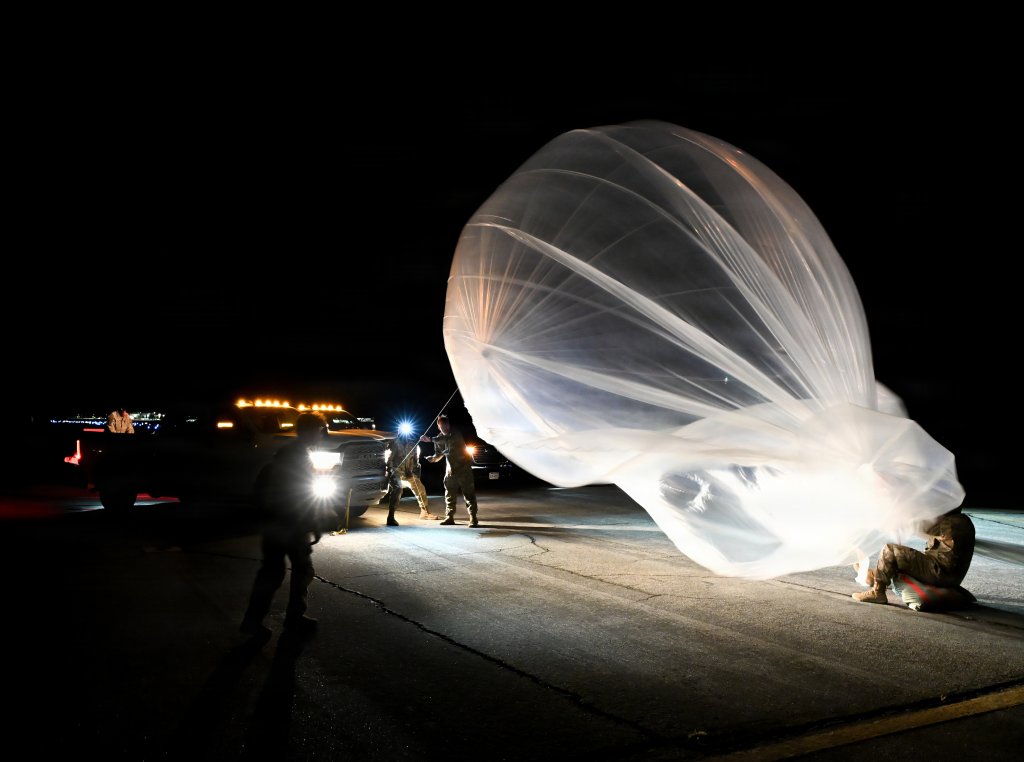
The Army’s overall vision for balloons is not new; the service has been openly discussing it for at least six years now. However, the use of high-altitude balloons in this context is now being operationalized. Meanwhile, China has very actively shown off its ability to gather intelligence and conduct other missions using balloons and other lighter-than-air craft on a broad operational level across the Pacific. TWZ had been reporting on this reality for years before it was thrust fully into the public consciousness after a Chinese spy balloon passed over parts of the United States and Canada back in 2023.
The concept Carpenter laid out for how balloons will be used in a future European conflict is another example of the renaissance in lighter-than-air military technology and how the Pentagon is increasingly seeking to weaponize it on a grand scale.
Contact the author: howard@twz.com
Loading comments…
Comments couldn’t be loaded. Please refresh the page.